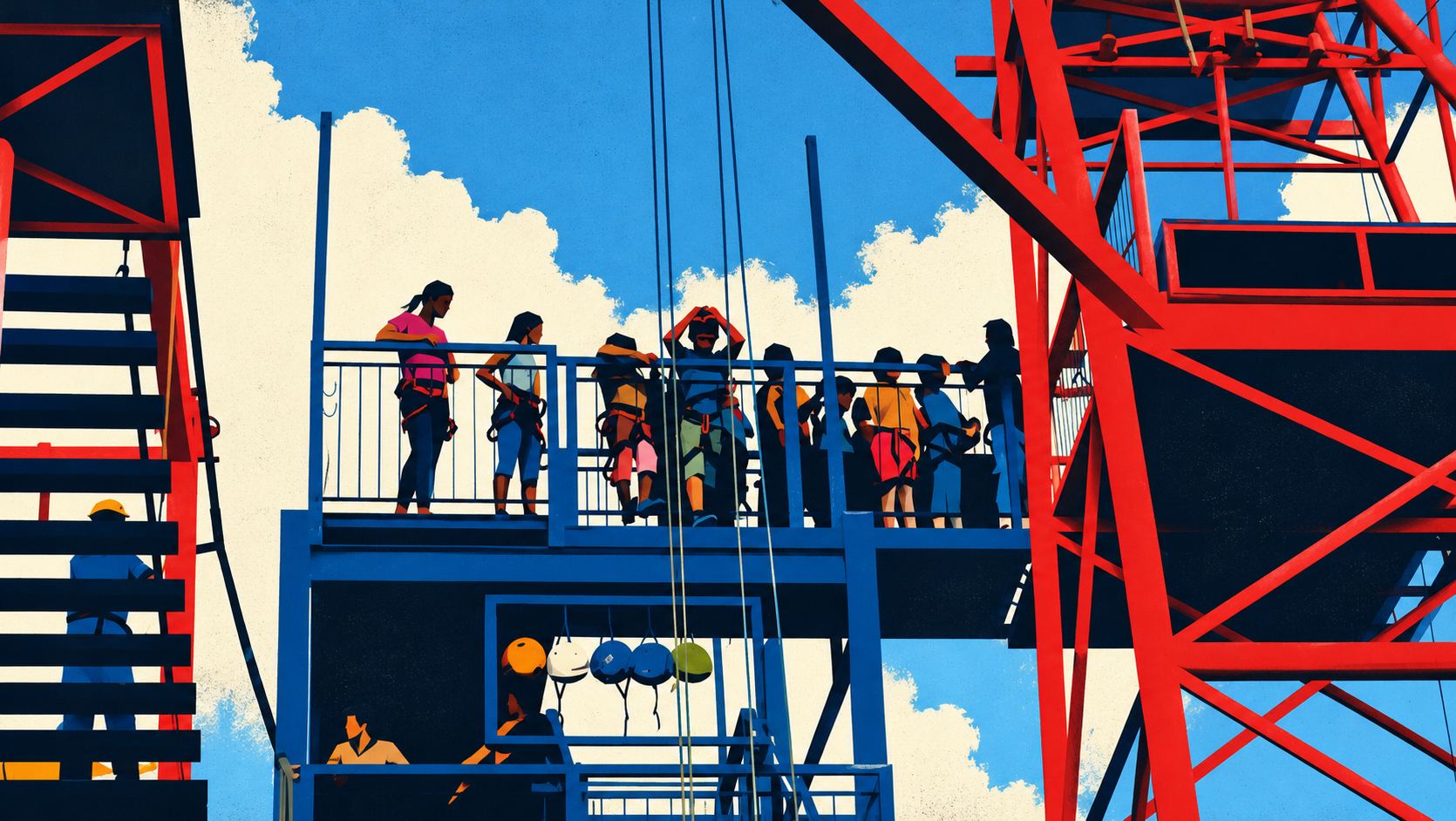
Red Steel, Blue Sky: A Photograph Turned into Abstract Poster Art
Red steel, cobalt platforms and suspended ropes turn a photograph into a bold abstract print, balancing industrial geometry with the human anticipation of a moment above ground.
Fujifilm Introduces HX1024 Printbar System for Customized Construction Materials
FUJIFILM Integrated Inkjet Solutions has introduced the FUJIFILM HX1024 Printbar System, bringing high-speed, full-color digital printing to construction products including house wrap, sandpaper, drywall and…
Remembering Giraffes Turns Wildlife Photography Into a Book With a Conservation Purpose
The latest Remembering Wildlife book gives donated photographs and contest-winning images a lasting printed form, with profits supporting giraffe conservation.
PRINTING United Expo 2026, September 23–25, Las Vegas Convention Center, Las Vegas
This is North America’s largest print show. Registration opened in May with nearly 650 exhibitors already signed and more than 90% of the floor sold.…
FESPA Global Print Expo ’26, 19–22 May 2026, Barcelona, Spain
FESPA Global Print Expo 2026 is basically a large-scale industry event focused on print, signage, and visual communications, and in 2026 it’s set to take…
FUJIFILM instax SPOT™ Brings Instant Prints to Every Experience
FUJIFILM North America Corporation is leaning hard into something that already feels obvious once you see it—people don’t just want photography anymore, they want moments…
Collecting Japanese Prints: What to Look For and Where to Start
Japanese woodblock prints are among the most accessible areas of serious art collecting. A practical guide to edition quality, condition, reproductions, and where to start — including why shin-hanga is currently undervalued.
Shin-Hanga: The Modernist Revival of the Japanese Print
When ukiyo-e collapsed in the Meiji era, two movements tried to revive the woodblock print. Shin-hanga, championed by publisher Watanabe Shōzaburō, produced artists like Hasui and Yoshida whose work stands on its own terms.
Japonisme: How Japanese Prints Rewrote Western Art
When Japanese prints flooded into Europe after 1853, they reorganized how Western painters thought about color, composition, and space. Monet, Degas, Van Gogh, Toulouse-Lautrec: all were students of the floating world.
How a Japanese Woodblock Print Was Made: From Sketch to Impression
A ukiyo-e woodblock print was made by a team: publisher, artist, carver, printer. Understanding the process — the kento marks, the baren, the dampened washi — transforms how you see the finished image.
Sharaku’s Actors: The Face Behind the Role
Sharaku produced 140 prints of kabuki actors in ten months in 1794 and then disappeared forever. His identity remains unknown. His work remains unlike anything else in Japanese art.
Utamaro’s Women: Beauty, Power, and the Close-Up
Utamaro invented the close-up portrait in the 1790s, filling his prints with faces that are psychologically present in a way that still feels modern. His influence on Western painting was profound and largely uncredited.
Hiroshige and the Rain: Atmosphere as Subject
Hiroshige was the ukiyo-e master of atmosphere — of rain, mist, and weather as subjects in themselves. Van Gogh traced his prints. An appreciation of the artist who made landscape feel like memory.
Hokusai’s Great Wave: The Most Recognized Print in History
Hokusai made the most recognized image in art history in his early seventies, as part of a series meditating on impermanence, scale, and the permanence of mountains. A close look at what makes the Great Wave so strange.
Jukebox Print Pushes Background Removal Further Into the Production Workflow
Jukebox Print is making a smart bet on something most design platforms still treat as a lightweight convenience feature. Background removal is usually framed as…
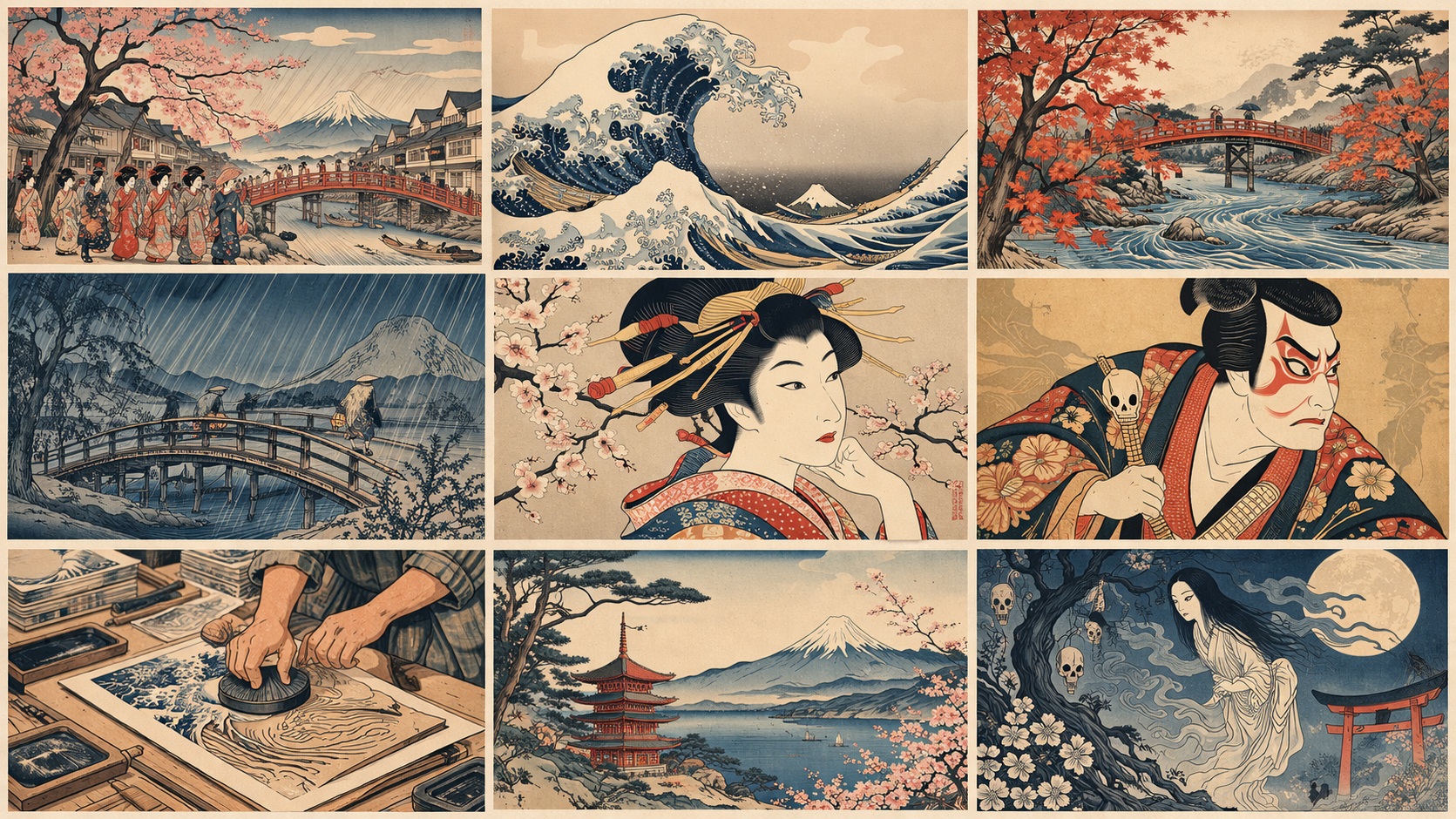
Ukiyo-e: The Floating World in Woodblock Form
The Japanese woodblock print tradition that flourished for two centuries managed something rare: art for the masses that also changed the course of world painting. An introduction to ukiyo-e, the floating world in ink and pigment.
How Photographers Choose Paper for Their Editions
Paper is not a neutral carrier of photographic information. It is an active participant in the image — its surface texture, weight, color, and optical…
Studio Visit: Inside a Fine Art Print Atelier
The fine art print atelier is a particular kind of workspace — neither gallery nor factory, but something between the two. It is a place…
Spotlight: Master Printers Who Work Behind the Scenes With Famous Photographers
When you acquire a print by a celebrated photographer, there is often an unacknowledged third party involved: the master printer. In photography, as in printmaking…
Storing Unframed Prints Correctly
The majority of a collection — in most cases — is in storage rather than on display at any given time. How unframed prints are…
Matting and Framing Decisions That Affect Long-Term Archival Quality
Framing is where many collectors make choices that compromise the long-term condition of their prints — not out of indifference but out of unfamiliarity with…
How Humidity and Light Degrade Prints Over Time
Fine art prints are not permanent objects. They are made of materials — paper, ink, binding agents, toning compounds — that respond to their environment…
UV Glass vs. Museum Glass: Is It Worth the Cost?
The glazing in a frame is one of the most consequential decisions in displaying a fine art print, and one of the most frequently underestimated.…
The Resale Market for Photography Prints: What Holds Value
Most fine art prints do not appreciate significantly in value. That is not a counsel of despair — it is a realistic baseline from which…