• Skip to main content
  • Skip to secondary menu
  • Skip to footer

Prints.org

The Art of Printing

  • Sponsored Post
  • Events
  • About
  • Contact

How Photographers Choose Paper for Their Editions

April 5, 2026 By admin

Paper is not a neutral carrier of photographic information. It is an active participant in the image — its surface texture, weight, color, and optical properties all contribute to how a print looks and how it feels as an object. Photographers who think carefully about their editions think carefully about paper, and the choices they make reveal something about how they understand their own work.

The Variables

Paper choice involves several simultaneous decisions. Surface finish — matte, semi-matte, glossy, or the hybrid baryta/luster surface — affects how light interacts with the print and how much detail and dynamic range the image appears to have. Glossy surfaces produce deeper blacks and more saturated colors; matte surfaces have lower maximum density but render shadows with a subtlety that some photographers prefer. Baryta papers — coated with barium sulfate in a process that mimics the surface of traditional darkroom fiber-based paper — occupy a position between the two that many photographers find ideal for fine art inkjet work.
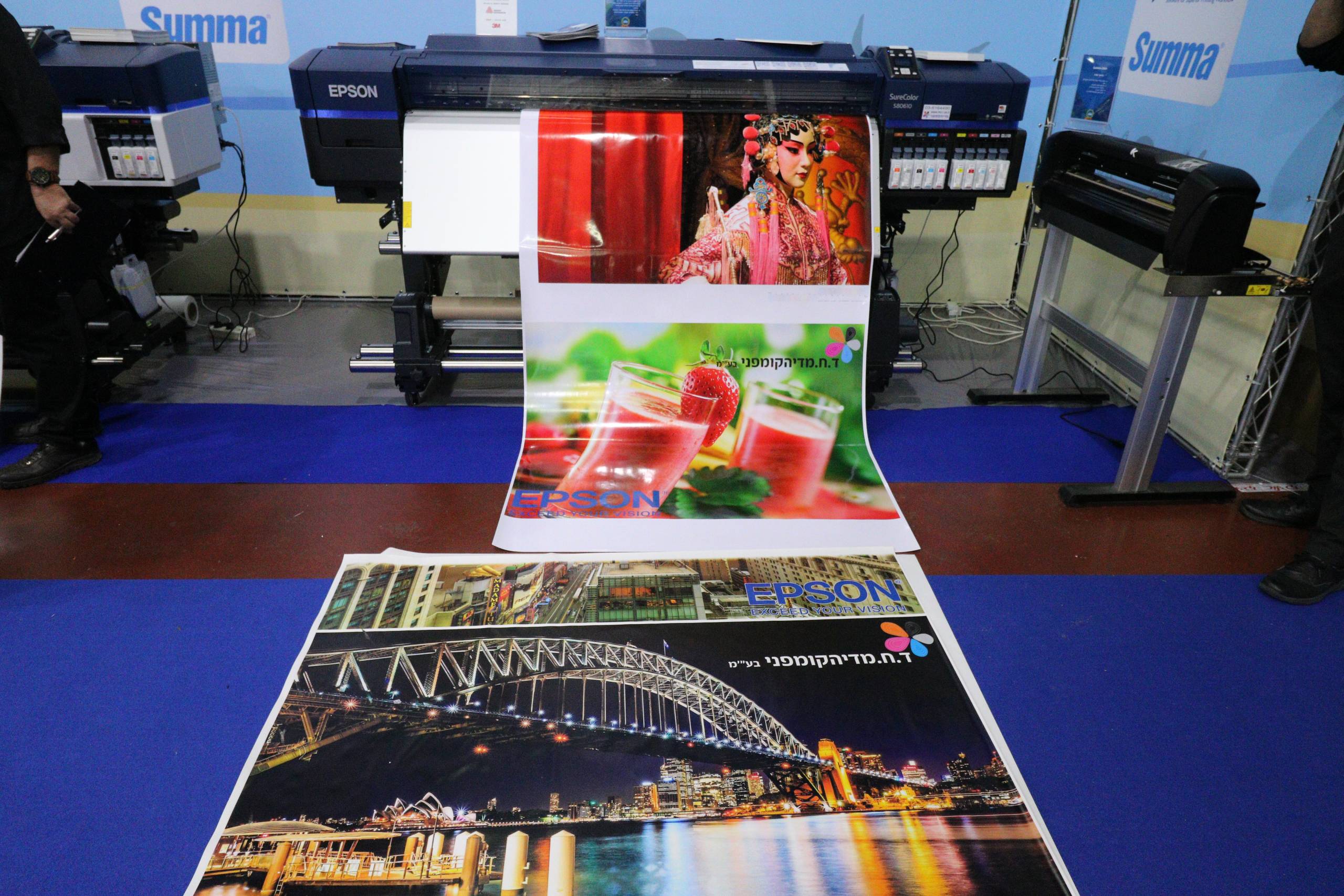
Digital Printing

Paper weight affects the physical presence of the print. A 300gsm cotton rag sheet is a substantial object; a 190gsm baryta paper is lighter and more flexible. For editions that will be sold unframed, the paper’s ability to be handled without creasing or marking is a practical consideration. For editions sold in frames, weight matters less.

Paper color — the base white, which can range from warm cream to cold bright white — profoundly affects the perceived tonality of the image. A photograph with warm highlights looks different on warm-toned versus cool-toned paper, and the choice often reflects the photographer’s intentions about mood and atmosphere.

Cotton Rag vs. Alpha-Cellulose

For archival editions, paper composition is a key consideration. Cotton fiber papers — made from 100% cotton rather than wood pulp — are more dimensionally stable, more resistant to chemical degradation, and longer-lived than even the best alpha-cellulose (purified wood pulp) alternatives. They are also more expensive. Most serious fine art print editions use cotton fiber paper; alpha-cellulose papers with appropriate buffering are appropriate for more accessible editions where cost is a factor.

Testing and Choosing

Experienced photographers who produce their own editions maintain a library of paper samples and test prints. When a new image is being prepared for edition, test prints on two or three candidate papers are made side by side, examined under consistent lighting, lived with for a few days, and then compared. The winning paper is typically the one that serves the image’s particular requirements — the one that makes the image look most like what the photographer intended, rather than the one that shows off the paper’s technical performance.

The Paper as Part of the Work

For some photographers, paper is a deliberate conceptual choice as much as a technical one. A photographer documenting industrial landscapes might choose a heavy, rough cotton rag paper that echoes the materiality of their subject. A photographer working with intimate, delicate imagery might choose a thin, translucent Japanese kozo paper that contributes its own fragility to the work. These choices are documented in the edition specifications and are part of what collectors are acquiring when they buy the print.

Filed Under: Prints Tagged With: editions, fine art printing, inkjet, paper, photographers

Footer

Recent Posts

  • FUJIFILM instax SPOT™ Brings Instant Prints to Every Experience
  • Collecting Japanese Prints: What to Look For and Where to Start
  • Shin-Hanga: The Modernist Revival of the Japanese Print
  • Japonisme: How Japanese Prints Rewrote Western Art
  • How a Japanese Woodblock Print Was Made: From Sketch to Impression
  • Sharaku’s Actors: The Face Behind the Role
  • Utamaro’s Women: Beauty, Power, and the Close-Up
  • Hiroshige and the Rain: Atmosphere as Subject
  • Hokusai’s Great Wave: The Most Recognized Print in History
  • Jukebox Print Pushes Background Removal Further Into the Production Workflow

Media Partners

  • Media Presser
  • Media Instances
  • Calendarial
Biometric Technologies and Congress: Recent Legislation and Open Questions
Biometric Technologies and Global Security: An Overview
How Biometric Technologies Are Being Used Today
How Biometric Technologies Can Fail: Bias, Spoofing, and Data Poisoning
The $1,000 Federal Seed Money Behind Trump Accounts
ImageKit Introduces Folder-Level Governance With New Path Policies Feature
Night Broadcast, City as Canvas
A Dance of Identity in the Shadow of Stephansdom
Markets Keep Betting on Resilience Even as the Shock Deepens
Primorsk and the Expanding Logic of Energy Infrastructure Warfare
Gartner Finance Symposium/Xpo 2026, June 8–9, London
Financial Results Calendar – April–May 2026
Fixed Summit, April 27–29, 2026, Hyatt Regency Lost Pines Resort near Austin
Milken Institute Global Conference 2026, May 3–6, Beverly Hills
COMPUTEX 2026, June 2–5, Taipei

Media Partners

  • pho.tography.org
  • Posters.org
  • Photo Contest
Camera WiFi Standards: Who Leads, Who Lags
NAB Show 2026, April 18–22, Las Vegas
TTArtisan 14mm f/2.8 ASPH Lens Review
When APS-C Glass Pretends to Be Full Frame, A Little Optical Surprise
Bending Marienplatz: Fisheye Compression in a Crowded Square
The Pulse of American Journalism
Language Is the Hardest Part of European Identity
Bauhaus and the Poster: Form Follows Persuasion
Collecting Vintage Travel Posters: What the Market Knows
How to Frame and Display Posters: A Few Rules the Industry Won't Tell You
After the Loss: What to Do With Feedback, Silence, and the Urge to Quit Entering
Black and White in Color Contests: When Monochrome Wins and When It Loses
The Submission Trap: Why Your Best Shot Is Rarely Your Strongest Entry
Portrait Contest Photography: Technique Versus Intimacy
What Judges Actually See First: The Brutal Truth About Photo Contest Scoring

Copyright © 2015 Prints.org

Technologies, Market Analysis & Market Research Reports

We use cookies on our website to give you the most relevant experience by remembering your preferences and repeat visits. By clicking “Accept”, you consent to the use of ALL the cookies.
Do not sell my personal information.
Cookie SettingsAccept
Manage consent

Privacy Overview

This website uses cookies to improve your experience while you navigate through the website. Out of these, the cookies that are categorized as necessary are stored on your browser as they are essential for the working of basic functionalities of the website. We also use third-party cookies that help us analyze and understand how you use this website. These cookies will be stored in your browser only with your consent. You also have the option to opt-out of these cookies. But opting out of some of these cookies may affect your browsing experience.
Necessary
Always Enabled
Necessary cookies are absolutely essential for the website to function properly. These cookies ensure basic functionalities and security features of the website, anonymously.
CookieDurationDescription
cookielawinfo-checkbox-analytics11 monthsThis cookie is set by GDPR Cookie Consent plugin. The cookie is used to store the user consent for the cookies in the category "Analytics".
cookielawinfo-checkbox-functional11 monthsThe cookie is set by GDPR cookie consent to record the user consent for the cookies in the category "Functional".
cookielawinfo-checkbox-necessary11 monthsThis cookie is set by GDPR Cookie Consent plugin. The cookies is used to store the user consent for the cookies in the category "Necessary".
cookielawinfo-checkbox-others11 monthsThis cookie is set by GDPR Cookie Consent plugin. The cookie is used to store the user consent for the cookies in the category "Other.
cookielawinfo-checkbox-performance11 monthsThis cookie is set by GDPR Cookie Consent plugin. The cookie is used to store the user consent for the cookies in the category "Performance".
viewed_cookie_policy11 monthsThe cookie is set by the GDPR Cookie Consent plugin and is used to store whether or not user has consented to the use of cookies. It does not store any personal data.
Functional
Functional cookies help to perform certain functionalities like sharing the content of the website on social media platforms, collect feedbacks, and other third-party features.
Performance
Performance cookies are used to understand and analyze the key performance indexes of the website which helps in delivering a better user experience for the visitors.
Analytics
Analytical cookies are used to understand how visitors interact with the website. These cookies help provide information on metrics the number of visitors, bounce rate, traffic source, etc.
Advertisement
Advertisement cookies are used to provide visitors with relevant ads and marketing campaigns. These cookies track visitors across websites and collect information to provide customized ads.
Others
Other uncategorized cookies are those that are being analyzed and have not been classified into a category as yet.
SAVE & ACCEPT